My practice sits between computational design, spatial intelligence, AI systems, embodied interaction, and cultural research. It begins from subatomic entropy as a muse: the continuous instability, transformation, and reorganization through which matter, intelligence, and systems evolve.
I design systems that mediate between human and computational intelligence, treating human–machine assemblages as both actors within and audiences of the Anthropocene. These systems allow existing environments to perceive, respond, adapt, and transform.
Across architecture, urban systems, performance, markets, and ritual, I investigate how computational layers can reveal forces that ordinarily remain hidden: the emotional logic of space, the collective intelligence of crowds, uncertainty within decision systems, the Dramaturgy of movement, and the infrastructures organizing everyday life.
My method combines radical experimentation, cybernetic attention practices, computation, and systems-based Dramaturgy. Through interfaces, maps, spatial tools, performances, websites, diagrams, and speculative prototypes, I construct feedback systems that make perception actionable and experimentation consequential.
Each project operates as an evolutionary test site: a bounded intervention through which new relations between bodies, machines, environments, and institutions can be observed, reorganized, and amplified.
The objective is not computation for its own sake, but systems-level impact, using design to alter how intelligence circulates, how attention is directed, and how human systems adapt under conditions of accelerating planetary change.
My practice tries to ask the question,
How can entropic, computational, and cybernetic processes help human–machine systems become more perceptive, adaptive, and capable of evolving together?
100 Guests at a Dinner Party.
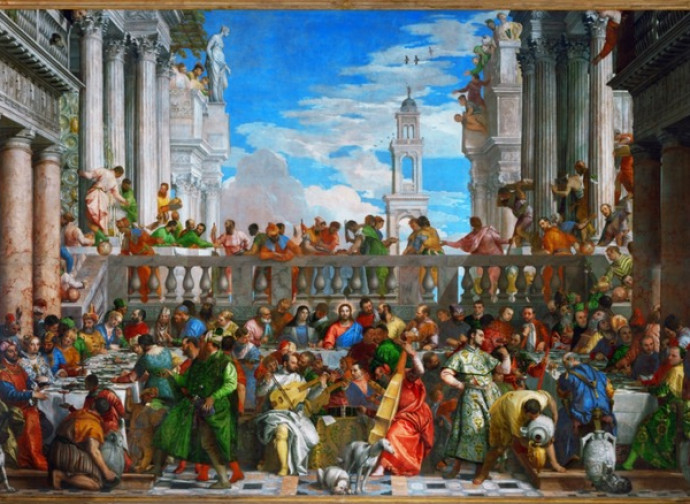
One hundred human, machine, institutional, ecological, and infrastructural intelligence gathered as the audience, and active agents, of the Anthropocene.
Someone asked what landscape design is, and this came out unrehearsed:
Landscape design is laying out a hundred different people on a dining table, and you have to make sure the guy in the front can speak fine with the guy on the other side, and the guy here can speak to the guy on the right and also the left, and nobody fights, and you have to do that with a hundred different people.
That's what planting design is.
You have to understand everyone's character, everybody's nature, everybody's demand for water, some will want more, some will want less. Everybody's demand for light.
The texture, the colour of the leaf, some light green, some dark green, some rough, some soft. The flower size, the flowering season, who will stand up in summer, who will stand up in winter.
You think about the planting plans aerially, laterally, experience-wise, how does it play in your mind. A final planting plan takes an office close to two and a half months. First sketches: decide morphology and time, what should be tall, what should be short. Then sightlines: if I'm standing here, where does the vision go. Then the structure of space: what encloses, what leads, visual porosity, direct vision. Then the family of plants: soft gentle people, or unruly people, boisterous or calm, or all of them, conversing in different parts.
You make a list of two hundred to seat a hundred.
You sort them: I don't want to converse with this guy this time, maybe next time, let's move him out.
Then finally they are your guests. The anchor people keep the conversation going; you create variations of subsidiary application and keep iterating. It always starts from the experience you want to build, then you reverse-engineer the process. It's not about filling up space. It's a spatial tool.
That was not a description of gardening. It was the method the whole practice already runs on, finally spoken aloud. This manual is that method, formalized and put to work.
Most design fills space with objects. This system does the opposite: it designs the relationships between elements and the experience they produce, then works backward to place the objects.
Elements are not units, they are characters, each with a nature, needs, and behavior over time.
The designer is not arranging things; the designer is hosting a conversation, and every conversation has a Dramaturgy, tension, release, an arc that gets engineered. The object placed is the last decision, never the first.
The Method,
Start from the experience, map the characters, score their relationships, place the anchors, and iterate until the system holds.
@Varadraj.borde.Copyright.2026.